

So, you want to write like Shakespeare. It isn’t about copying old phrases or forcing thee’s and thou’s whenever you can. The good news? His techniques still work today. This guide will walk you through the methods that can help you give your writing a touch of Shakespeare’s magic.
1. Use Inversion
Inversion means flipping the typical word order in a sentence. Instead of writing “I am hungry,” you might write “Hungry am I.”
Shakespeare used inversion constantly, partly because it helped him maintain his meter and partly because it added dramatic weight to certain phrases. Take this line from Hamlet: “What a piece of work is man!”.
Tip: Use inversion sparingly. Only use it when you want to emphasize something important.
2. Use Blank Verse and Iambic Pentameter
Blank verse is unrhymed poetry that follows specific metered lines. Shakespeare’s preferred form was iambic pentameter, a rhythmic pattern that uses ten syllables per line, alternating between unstressed and stressed beats.
Consider these lines from Hamlet:
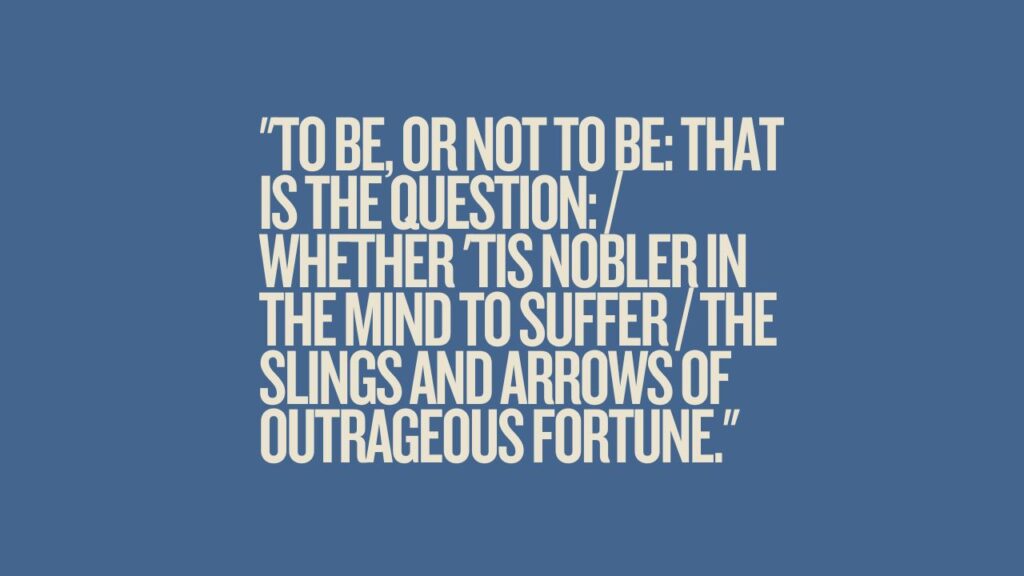
Read them aloud and you’ll hear the rhythm: to BE or NOT to BE that IS the QUES-tion. Each line contains exactly ten syllables with stresses falling on every second beat.
Something to keep in mind, though. Shakespeare sometimes varied this pattern (like adding or dropping a syllable and shifting a stress) to make the verse feel more natural or to emphasize emotion.
Tip: Writing in iambic pentameter takes practice. The key is in understanding the rhythm and then breaking it intentionally.
3. Add Metaphors and Imagery
Shakespeare’s writing never just stated facts; he filled it with metaphors and vivid imagery.
Look at this passage from Macbeth:

Macbeth compares life to an actor performing briefly before disappearing. The metaphor works on multiple levels. It suggests life is temporary, performative, and ultimately meaningless. The imagery of strutting and fretting makes the idea physical and emotional.
Tip: When you write with metaphors, choose comparisons that reveal something new about your subject. Avoid clichés like “time is money” or “love is a journey.” Shakespeare’s metaphors felt fresh because he drew connections between unlikely things —he compared lovers to celestial bodies, ambition to a disease, and jealousy to a green-eyed monster.
4. Use Soliloquies
Shakespeare used soliloquies to reveal a character’s inner world. These speeches reveal what characters truly think and feel, stripped of any social pretense.
Hamlet’s “To be, or not to be” speech is probably the most famous soliloquy in English literature.
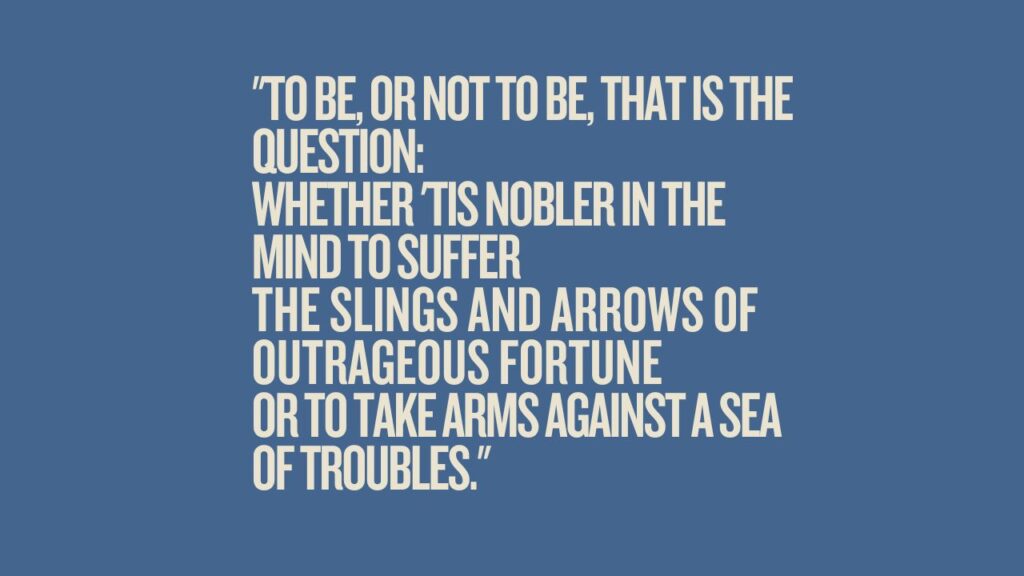
Hamlet wrestles with the question of suicide, weighing life’s suffering against the fear of death. In return, it gives us direct access to Hamlet’s tortured mind.
You can create soliloquy-like moments by letting the character speak honestly without worrying about how others will react. Show their reasoning through a problem, fighting with contradictory feelings, or arriving at a decision.
5. Add Monologues
In a monologue, one character dominates the conversation, speaking at length while others listen. And, yes, Shakespeare used monologues for storytelling, persuasion, and character revelation.
Mark Antony’s funeral speech in Julius Caesar is a masterful monologue:

“Friends, Romans, countrymen, lend me your ears;
I come to bury Caesar, not to praise him.”
Throughout the speech, Antony manipulates the crowd’s emotions, turning them against the conspirators.
6. Apply Alliteration
Shakespeare employed alliteration, the repetition of a consonant sound at the start of close words, to create memorable phrases and emphasize the musical quality of his lines.
From A Midsummer Night’s Dream:

Tip: Try sprinkling alliteration throughout your writing. You don’t want every sentence to be alliterative, but a well-placed repetition of sounds can make a phrase pop.
7. Apply Anaphora
Anaphora is the use of the same word or phrase at the beginning of successive sentences. Shakespeare used anaphora to create rhythm and build intensity. The repetition hammers home a point and makes the language feel more powerful.
In Richard II, the line reads:

The repetition gives the sentence power and rhythm, showing affection and making it sound heartfelt.
Tip: The repetition should emphasize your main point. Build your sentences so each one adds new information while maintaining the same opening. The technique works especially well in persuasive writing and speeches.
8. Use Stichomythia
Shakespeare employed stichomythia, a dialogue method in which characters deliver quick, one-line replies, to build tension and illustrate conflict.
From Richard III, when Anne confronts Richard:

You can use stichomythia in any scene where characters are sparring verbally as long as you keep the lines short and punchy. Remember, each response should directly address what the other person just said.
Tip: Stichomythia is not appropriate for every dialogue, but when you need to show characters clashing, it is incredibly effective.
Make ChatGPT Write Like Shakespeare
Aside from making ChatGPT your personal proofreader, you can also ask it to write in the style of Shakespeare. Copy and paste the prompt below:
Your task is to rewrite my text below in the style of Shakespeare. I want you to apply [stichomythia/anaphora/alliteration/soliloquies/metaphors and imagery/blank verse and iambic pentameter/inversion] to successfully complete your task.

My text is: [insert text].
Final Thoughts
And there you have it! You now know how to write like Shakespeare. Pick one method, master the fundamentals, and adapt it to your next writing assignment.