

AI detectors are now a standard part of editorial workflows and academic reviews, but are they even reliable?
To settle the debate once and for all, we put seven of the most popular detectors to the test. We fed them with an AI-generated text about duck care and a human-written article explaining the narrative point of view in fiction. The result? Well, let’s say that it will surprise you.
Quillbot’s AI Detector
| Website: | www.quillbot.com/ai-content-detector |
| Our verdict | Well-written AI-generated text could be flagged as human-written. |
| Accuracy on AI text: | Low |
| False positives | None for human-written text |
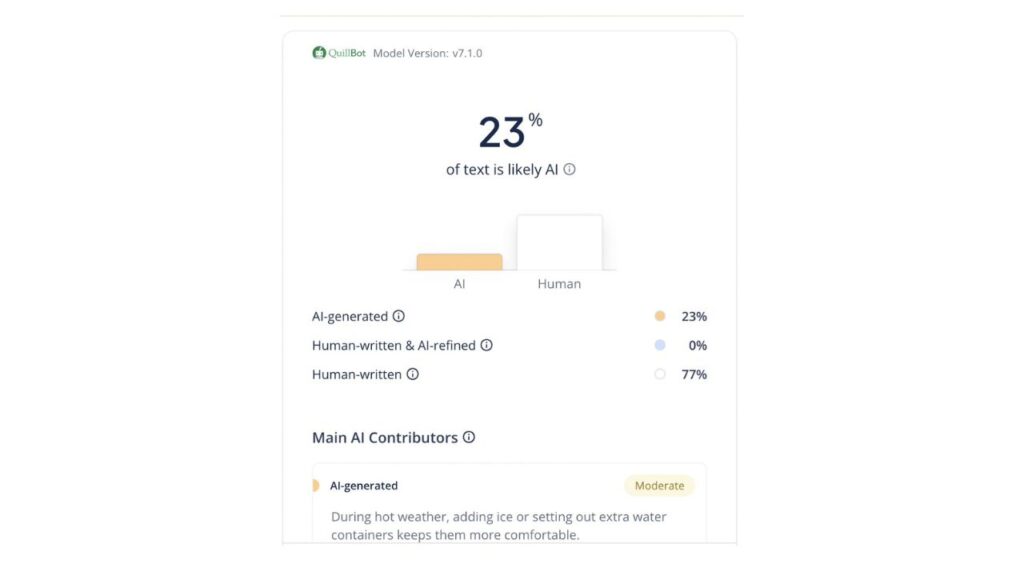
On the AI duck care post, Quillbot returned a low 23% AI probability score and a shocking 77% human-written probability.
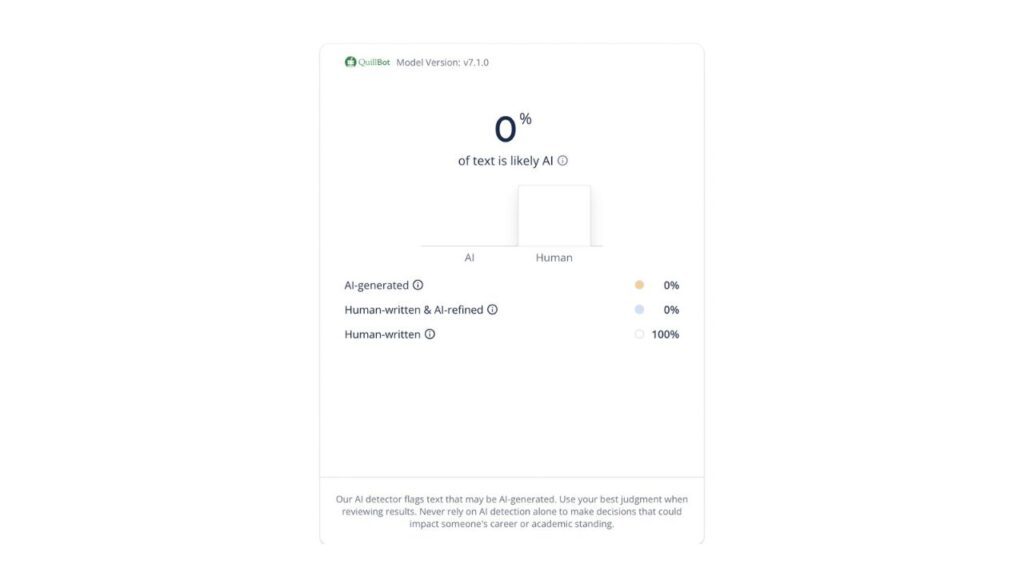
For the human-written piece, Quillbot rated it as 0% AI-generated.
We particularly loved that the detector goes beyond a raw percentage and highlights flagged sentences in yellow. That is useful for seeing what triggered the result rather than just staring at a number.
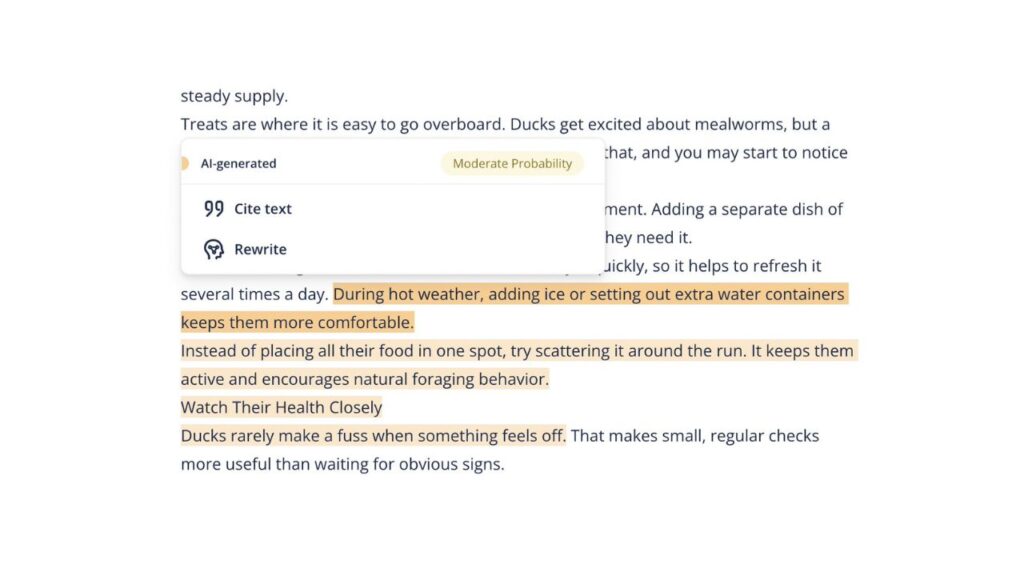
However, there is no explanation for why a sentence was flagged, no suggestions for how to address it. The 1,200-word scan limit also means longer pieces require multiple passes, which gets tedious fast.
Grammarly’s AI Detector
| Website: | www.grammarly.com/ai-detector |
| Our verdict | Human-written text can still be flagged as AI-generated. |
| Accuracy on AI text: | Moderate |
| False positives | Low on formal writing |
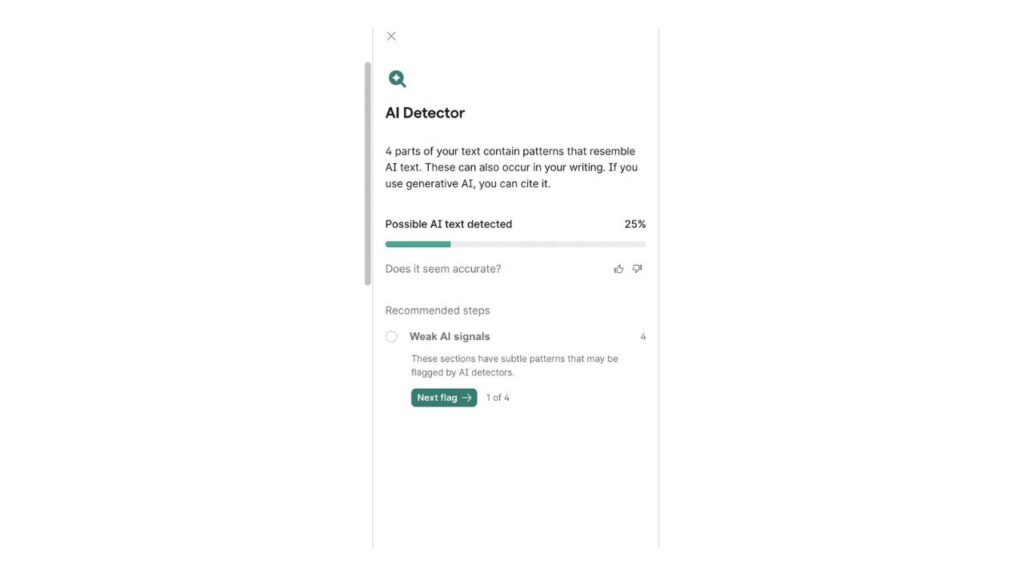
On the AI duck care post, Grammarly returned a mixed result; it picked up some AI patterns but did not flag the entire piece as AI-generated.
The human POV article did not trigger a strong AI flag. That is the right outcome, but the broader picture makes it hard to give Grammarly credit for it.
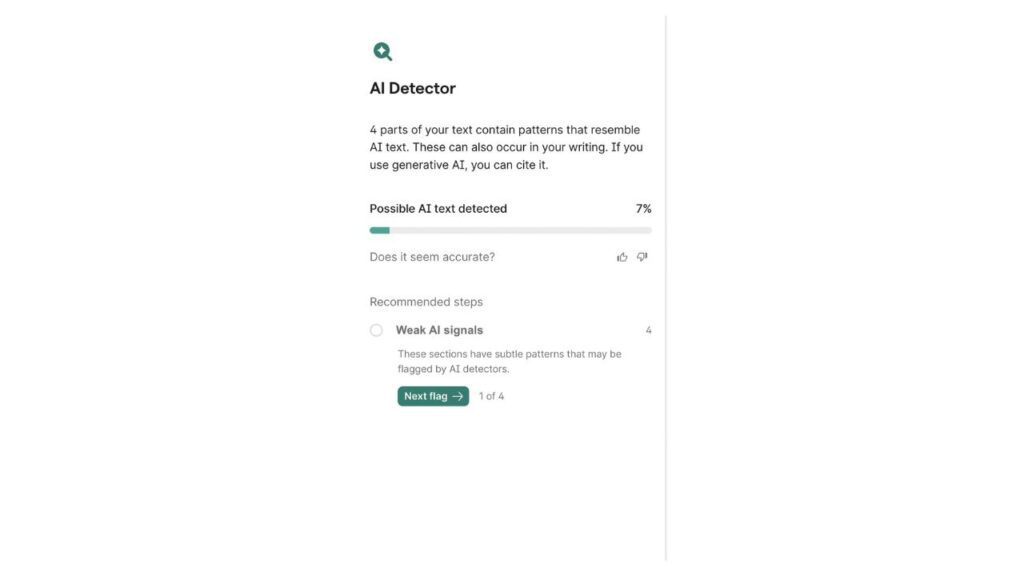
Plus, it only recommends that you rewrite the AI-flagged text.
GPTZero
| Website: | www.gptzero.me |
| Our verdict | Almost accurate (Flagged human-written text 99% human and AI-generated text 100% AI ) |
| Accuracy on AI text: | Very high |
| False positives | Very low |
The duck care post came back flagged as AI, and the human POV article returned a mostly human result.
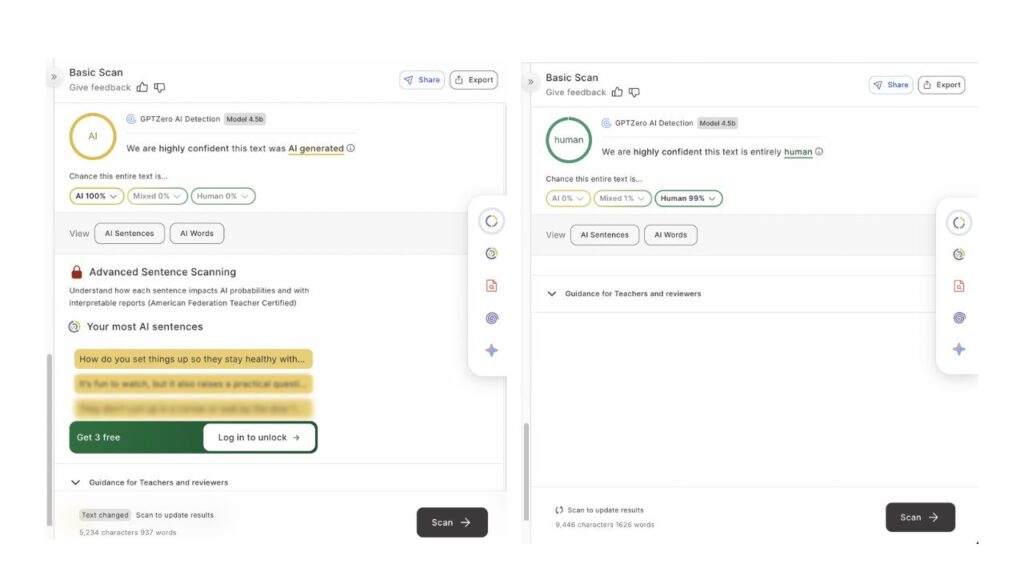
What separates GPTZero from every other tool in this list is what it does after it flags something. It explains why the text is marked as AI and points to specific signals, such as unusually low perplexity or uniform sentence structure. That explanation, combined with color-coded sentence highlighting, makes the result something you can actually act on rather than just a score to accept or dispute.
SurferSEO
| Website: | www.surferseo.com/ai-content-detector/ |
| Our verdict | Thinks AI-text is 70% human written. Human-written piece is 100% human. |
| Accuracy on AI text: | Low |
| False positives | Low |
SurferSEO is a popular SEO content optimization tool. And, yes, they now have an AI detector.
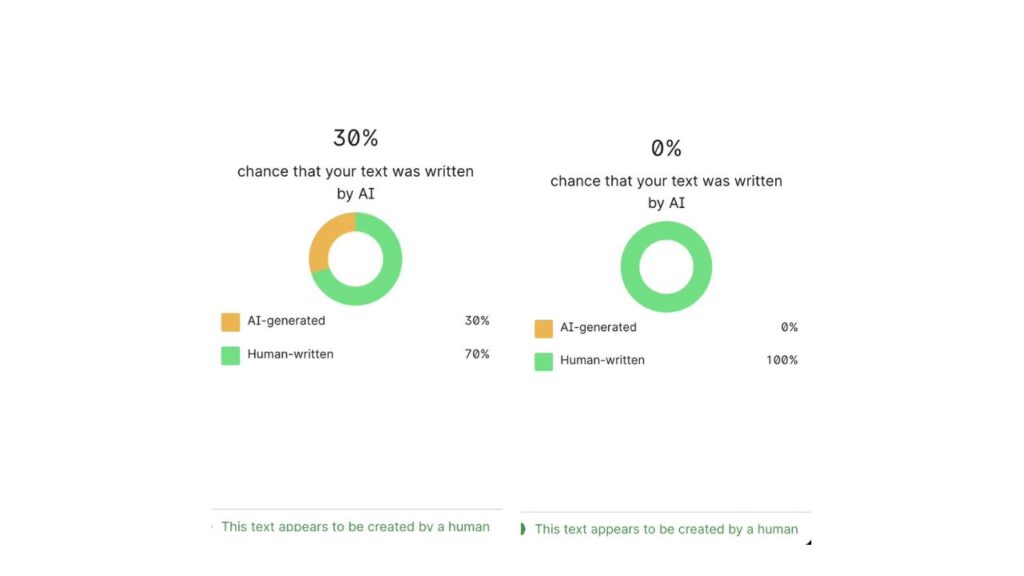
On the AI duck care post, it, unfortunately, returned 70% human-written. On the other hand, the human POV article returned a 0% AI score.
What the tool delivers is speed, unlimited free access, and integration with the broader Surfer content suite, which is genuinely practical for teams already working on that platform.
But if an AI-generated text is free from common AI phrases and clichés, it will most certainly think that it was written by a human.
Undetectable AI
| Website: | www.undetectable.ai/ |
| Our verdict | The limitation is practical: when models within the panel disagree, it is not always clear which signal to trust. |
| Accuracy on AI text: | High |
| False positives | Low |
Undetectable AI is primarily a humanizer tool designed to rewrite AI text so it bypasses other detectors. The detection side works differently from the other tools. It aggregates signals from eight AI detection models simultaneously and returns a consensus score rather than a single algorithm’s verdict.
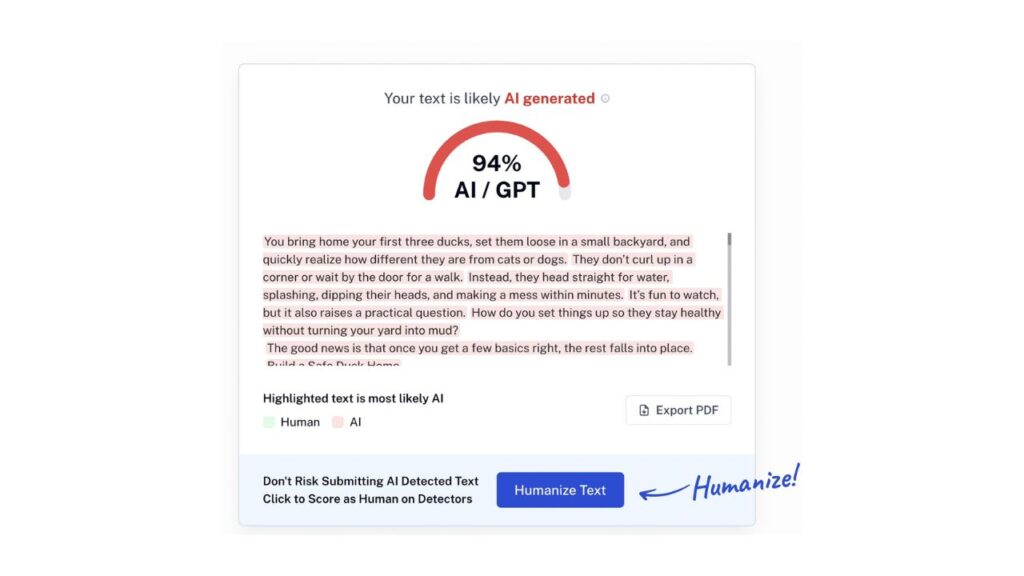
In the AI duck care post, the majority of models in the panel identified it as AI. Meanwhile, in the human POV article, most models produced human-like results, though a couple showed mixed results.
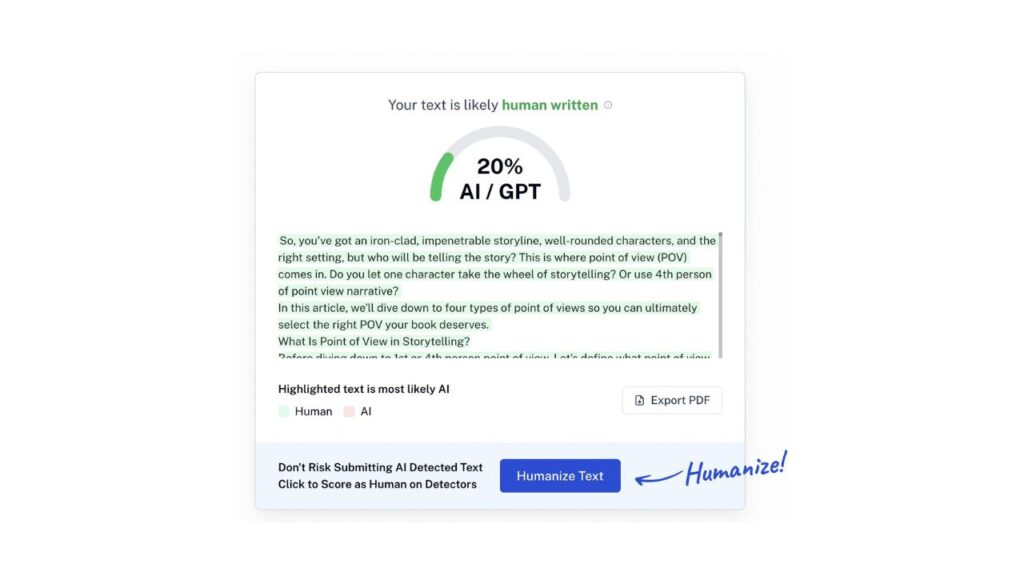
This consensus method helps prevent any one model’s blind spot from affecting the outcome, which is a key strength of this detector.
Originality AI
| Website: | www.originality.ai/ |
| Our verdict | The most accurate AI text checker we tried. |
| Accuracy on AI text: | High |
| False positives | Low |
On the AI duck care post, it flagged the content with very high confidence. The human POV article came back predominantly human.
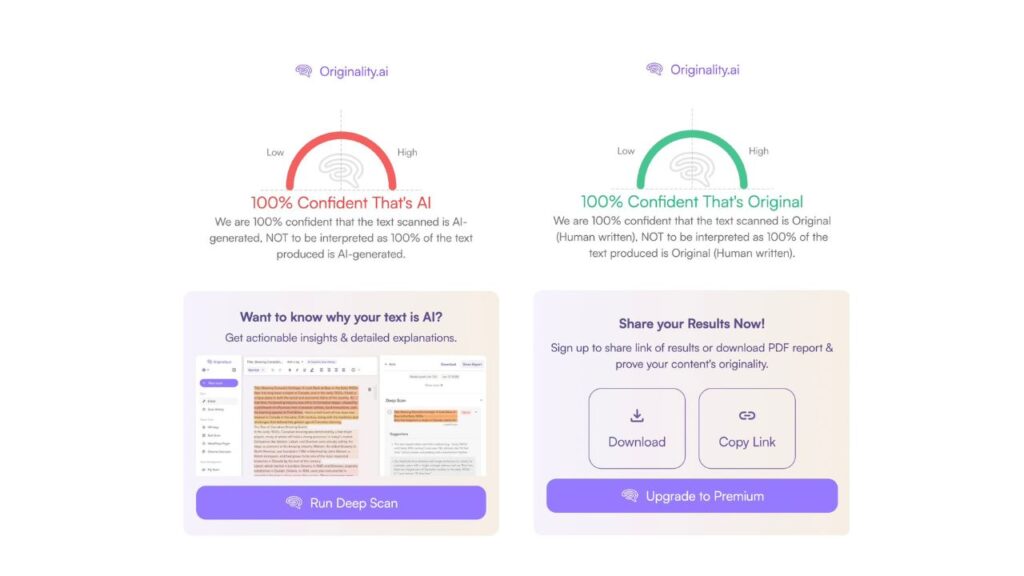
The tool’s strongest suit is catching unedited and lightly edited AI content, which covers the majority of what editorial teams actually screen.
For screening freelance submissions or guest posts, Originality AI earns its keep.
NoteGPT
| Website: | www.notegpt.io/ai-detector |
| Our verdict | Inaccurate results, but slightly better than other free detectors. |
| Accuracy on AI text: | Good on blog-format text |
| False positives | Lower than most free alternatives |
NoteGPT identified the duck care post as AI-generated, but it assigned only a 65.9% probability. In the human POV article, it returned 63% human-written text.
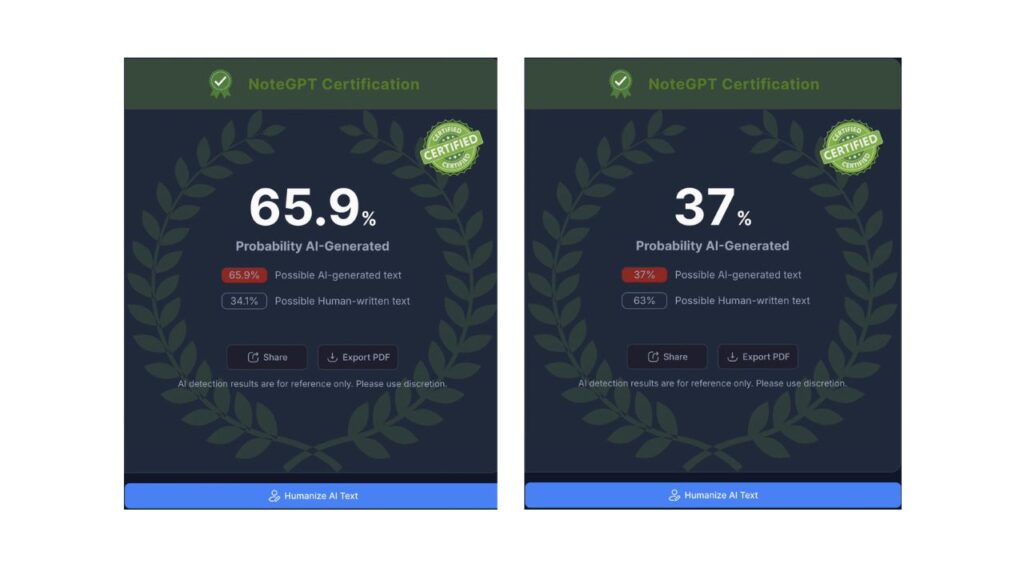
It highlights particular patterns (such as sentence structure, burstiness, and predictability) that influenced the score. This means the output is something you can assess rather than just accept.
Final Thoughts
AI detectors work best as a first signal, not a final verdict. If you still want to give them a try, consider GPTZero or Originality AI for their accuracy.
Remember, AI text checkers all have blind spots. For a sharper read on what AI writing actually looks like without running it through software, learn to spot AI text without detectors.