
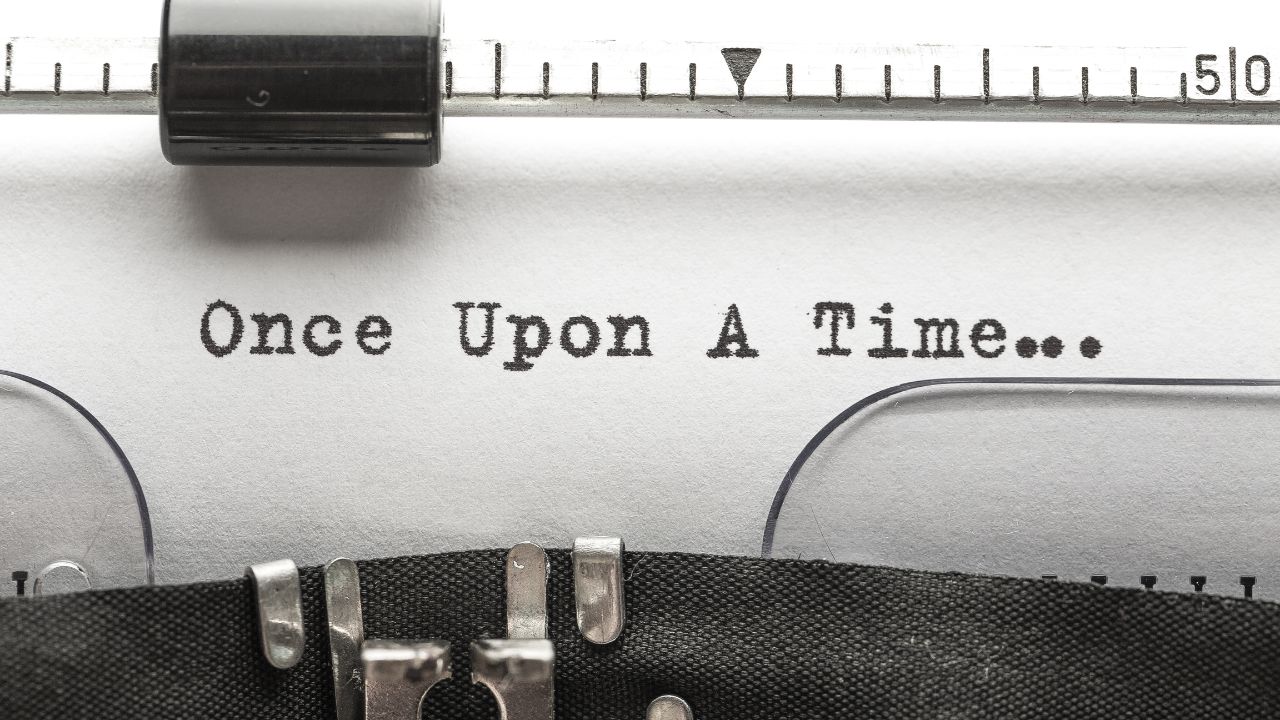
There are many ways to start a story, and just as many ways to lose your reader in the first few lines.
In this article, we’ll explore truly effective ways to begin a story. Whether you’re writing a novel, short story, or script, this guide is designed to help you craft a beginning that grabs, holds, and rewards your reader’s attention.
1. Unexpected Opening
One of the fastest ways to hook a reader is to break their expectations. Why? It creates immediate curiosity and demonstrates that the writer is in control.
But “unexpected” doesn’t mean random or shocking for the sake of it. The surprise must be grounded in character, tone, or theme, but also purposeful.
How to Do It
- Start with an unusual action or piece of dialogue that demands context.
- Place the reader in a moment that feels out of place, then slowly ground it.
- Flip a familiar situation on its head to subvert expectations.
Examples
“I’m pretty much f*cked.” — The Martian by Andy Weir
This opener delivers voice, urgency, and surprise in five words. The tone is casual, the situation clearly dire, and you’re instantly hooked by the contradiction.
“The baby is dead. It only took a few seconds.” — Lullaby by Leïla Slimani
This line is so direct and disturbing that you can’t help but ask: what happened, and why?
AI Prompt
I am writing a story about [insert context of your story, including key elements like the protagonist, setting, theme, and plot].

I want you to start my story with an unexpected opening. Consider the following:

- Unusual action or piece of dialogue that demands context.
- Place the reader in a moment that feels out of place, then slowly ground it.
- Flip a familiar situation on its head to subvert expectations.
2. Sensory Image of the Setting
Opening with a sensory image grounds your reader immediately and reveals how the protagonist experiences their world. That relationship between character and place hints at the story’s tone, stakes, or emotional arc.
How to Do It
- Focus on one or two strong, specific sensory details, such as sound, texture, temperature, smell, or motion.
- Filter the setting through the protagonist’s mindset. Is the room comforting or suffocating? Is the silence peaceful or threatening?
Use the setting to suggest where the story is emotionally or thematically headed.
Examples
“It was a bright cold day in April, and the clocks were striking thirteen.” — 1984 by George Orwell
We start with a clear sensory image (bright, cold) and a detail that signals unease (thirteen o’clock). The world is familiar and strange at once.
“The sun shone, having no alternative, on the nothing new.” — Murphy by Samuel Beckett
Dry, ironic, and subtly depressing. The setting reflects the emotional temperature of the story.
AI Prompt
I am writing a story about [insert context of your story, including key elements like the protagonist, setting, theme, and plot].

I want you to start my story with a sensory image of the setting Consider the following:

- Focus on one or two strong, specific sensory details, such as sound, texture, temperature, smell, or motion.
- Filter the setting through the protagonist's mindset.
3. Short Opening Sentence
Short sentences carry weight. They’re visually striking, rhythmically sharp, and often emotionally loaded. When isolated at the beginning of a story, it suggests something important has already happened, or is about to.
How to Do It
- Make it emotionally charged, mysterious, or slightly off-balance.
- Let it raise a question or suggest a contradiction.
- Avoid general statements. Aim for specificity or mood.
Examples
“Call me Ishmael.” — Moby-Dick by Herman Melville
Three words, infinite implications. Who is Ishmael? Is that his real name? Why call him that?
“They shoot the white girl first.” — Paradise by Toni Morrison
Shocking, direct, and impossible to ignore. The line offers no explanation, only urgency and dread.
AI Prompt
I am writing a story about [insert context of your story, including key elements like the protagonist, setting, theme, and plot].

I want you to start my story with a short opening sentence. Consider the following:

- Emotionally charged, mysterious, or slightly off-balance.
- Let it raise a question or suggest a contradiction.
- Avoid general statements. Aim for specificity or mood.
4. Let Your Main Character Speak
Another way to pull readers directly into the story? Let your protagonist speak. Why so? Well, that’s because a first-person opening provides instant access to the character’s voice, mindset, and emotional state, before we are aware of anything about the plot.
How to Do It
- Open with a line that captures the character’s attitude, not just their situation.
- Hint at what’s driving them: fear, longing, resentment, hope.
- Use voice to set tone and worldview, not just to deliver facts.
Example
“I was born twice: first, as a baby girl, on a remarkably smogless Detroit day in January of 1960; and then again, as a teenage boy, in an emergency room near Petoskey, Michigan, in August of 1974.” — Middlesex by Jeffrey Eugenides
This line draws us into the narrator’s complex identity, blending calm retrospection with startling revelations.
AI Prompt
I am writing a story about [insert context of your story, including key elements like the protagonist, setting, theme, and plot].

I want you to start my story by letting my main character speak. Consider the following:

- Open with a line that captures the character's attitude, not just their situation.

- Hint at what's driving them: fear, longing, resentment, hope.

- Use voice to set tone and worldview, not just to deliver facts.
5. Set the Mood
Mood is the emotional atmosphere, the subtle tone that lets readers know whether they’re stepping into something tender, eerie, cynical, melancholic, or wild.
The words you choose, the rhythm of your sentences, and the emotional temperature of your opening line all contribute to this invisible but powerful force.
How to Do It
- Choose verbs, adjectives, and imagery that reinforce a specific emotional tone.
- Use sentence length and structure to mirror the pace of the emotion. Short and clipped for anxiety, slow and winding for nostalgia.
- Anchor the mood in the first few lines, even before introducing characters or plot.
Example
“The sky above the port was the color of television, tuned to a dead channel.” — Neuromancer by William Gibson
This mood is grim, unnatural, and tech-saturated. And, of course, the simile is jarring and immediately sets the tone for the cyberpunk world that follows.
AI Prompt
I am writing a story about [insert context of your story, including key elements like the protagonist, setting, theme, and plot].

I want you to start my story by setting the mood. Consider the following:

-Choose verbs, adjectives, and imagery that reinforce a specific emotional tone.
- Use sentence length and structure to mirror the pace of the emotion.
- Anchor the mood in the first few lines, even before introducing characters or plot.
6. Start With a Frame Story
A frame story is a narrative structure in which one story is wrapped around another, often featuring a narrator or situation that provides context, distance, or tension to the main events.
It allows you to show from the start that this tale has already ended, or that it’s being remembered, confessed, or passed down. What will you get in return? Suspense, depth, and perspective even in simple narratives.
How to Do It
- Create a compelling reason for the story to be told: a secret, a warning, a reflection, a ritual.
- Make the outer narrator feel intentional.
- Use the frame to introduce tone and stakes.
- Transition smoothly into the main narrative, often signaled by a change in time, tense, or focus.
Examples
“You don’t know about me without you have read a book by the name of The Adventures of Tom Sawyer; but that ain’t no matter.” — Adventures of Huckleberry Finn by Mark Twain
Huck’s casual frame introduces the character, the past, and the tone of the book, while signaling that what follows is his version of events.
“In a hole in the ground, there lived a hobbit.” — The Hobbit by J.R.R. Tolkien
Though simple, Tolkien’s opening functions like a frame: it feels as if a tale is being told to us by someone older, wiser, and deeply familiar with this world.
AI Prompt
I am writing a story about [insert context of your story, including key elements like the protagonist, setting, theme, and plot].

I want you to start my story with a frame story. A frame story is a narrative structure in which one story is wrapped around another, often featuring a narrator or situation that provides context, distance, or tension to the main events.


Consider the following:

- Create a compelling reason for the story to be told: a secret, a warning, a reflection, a ritual.

- Make the outer narrator feel intentional.

- Use the frame to introduce tone and stakes.

- Transition smoothly into the main narrative, often signaled by a change in time, tense, or focus.
7. Establish Tension for Character Development
An effective beginning doesn’t require explosive action, but it benefits from pressure. When you open your story with emotional or situational tension, you immediately reveal the cracks in your character’s world and hint at the change to come.
How to Do It
- Open with a moment where the protagonist’s current life is misaligned with what they want, need, or fear.
- Let the first paragraph (or chapter) reveal a flaw, fear, or false belief. Something that will be challenged by the story ahead.
- Use dialogue, inner thought, or behavior to suggest emotional friction or discomfort, even if the plot hasn’t kicked off yet.
- Resist the urge to “solve” the tension too quickly. Let it simmer and shape the character.
Examples
“When he was nearly thirteen, my brother Jem got his arm badly broken at the elbow.”— To Kill a Mockingbird by Harper Lee
The story opens not with trauma, but with the memory of it. The entire first chapter reflects a tense and complex childhood, where the narrator’s emotional world is already subtly shaped by race, innocence, and injustice.
“It is a truth universally acknowledged, that a single man in possession of a good fortune, must be in want of a wife.”— Pride and Prejudice by Jane Austen
The tension here is cultural and social, expectation versus individuality. The story opens with sharp irony, signaling a conflict between societal norms and personal values that will define the characters’ growth.
AI Prompt
I am writing a story about [insert context of your story, including key elements like the protagonist, setting, theme, and plot].

I want you to start my story by establishing tension for character developement.

Consider the following:

- Open with a moment where the protagonist's current life is misaligned with what they want, need, or fear.

- Let the first paragraph reveal a flaw, fear, or false belief.

- Use dialogue, inner thought, or behavior to suggest emotional friction or discomfort, even if the plot hasn't kicked off yet.

- Resist the urge to "solve" the tension too quickly. Let it simmer and shape the character.
8. Hint at Your Inciting Incident
The inciting incident is the event that initiates the plot, the disruption that compels your character to act, change, or make a choice.
So, why is it a good way to start a story? Well, foreshadowing your inciting incident without fully revealing it builds tension, narrative cohesion, and reader investment. It also ensures that you are actively participating in the story’s forward motion from the beginning.
How to Do It
- Introduce an imbalance, a question, or a subtle disturbance in the status quo.
- Drop small, specific clues: a missed call, a nervous glance, a new person in town.
- Let your protagonist sense something, even if they can’t name it.
- Make the reader feel that the current moment can’t last.
Examples
“The snow in the mountains was melting, and Bunny had been dead for several weeks before we understood the gravity of our situation.” — The Secret History by Donna Tartt
The inciting incident, Bunny’s death, has already occurred by the time the story begins, but the actual event will be unpacked later. The sentence promises drama and mystery.
AI Prompt
I am writing a story about [insert context of your story, including key elements like the protagonist, setting, theme, and plot].

My story's inciting incident: [insert inciting incident information]


I want you to start my story by hinting my story's inciting incident

Consider the following:

- Introduce an imbalance, a question, or a subtle disturbance in the status quo.

- Drop small, specific clues: a missed call, a nervous glance, a new person in town.

- Let your protagonist sense something, even if they can't name it.

- Make the reader feel that the current moment can't last.
Finding the Right Opening for Your Story
And there you have it! The most important thing is to give readers a reason to care. Always remember that there’s no single perfect way to start a story, but there is a right way for your narrative.