
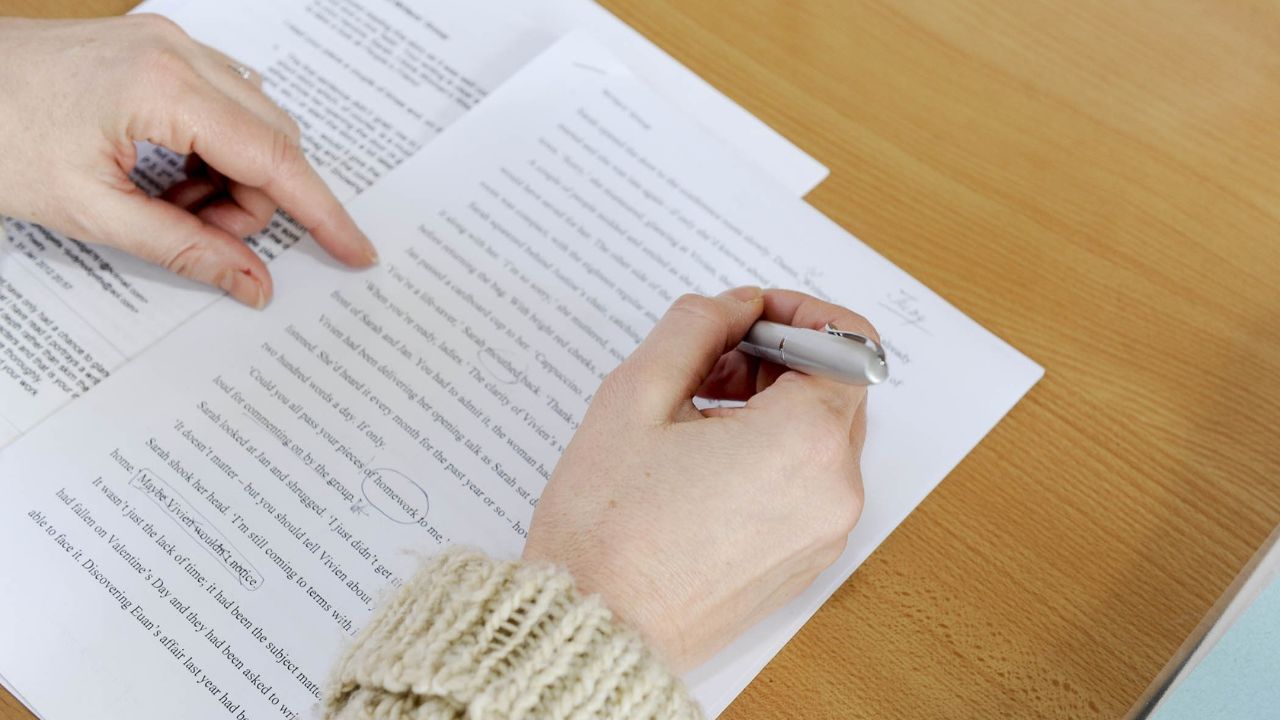
Paraphrasing. How hard could it be? Just rearrange around some words, use synonyms, and boom, you have something that is ‘original.’ If that’s what you believe about how paraphrasing works, you have to sit down for this—everything you know about paraphrasing is wrong.
Real paraphrasing is more than scouring the thesaurus for formal alternatives to the word ‘big’ or adding extra verbs and adjectives. So, how do you paraphrase the right way? Well, with the help of ChatGPT, you can have a free AI paraphraser right at your fingertips.
What Is Paraphrasing?
Paraphrasing is basically your brain saying: ‘OK, I get your point, now let me say it my way.’
You’re not copying or rearranging the words. You digest what the original text is saying, and then you translate or phrase it as you understood it while retaining the original meaning.
So, why not just use direct quotes?
Here’s the truth: putting quote after quote into an essay? It’s like seasoning food with salt only. There’s no part of your identity there.
Yes, direct quotes have their place, but if your whole essay is a giant block of borrowed words, you look like a robot who read something cool and just CTRL+C’d it.
Whereas using paraphrased texts shows that you’ve understood the source. It also:
- It keeps the writing flowing and natural.
- Sounds less like a textbook
- Helps you own your voice while still backing up your arguments.
And if you keep getting confused by the summary, don’t worry: most people do it.
A quick review:
- Summarise = condense the idea
- Paraphrasing = rephrasing the idea
They’re cousins, not twins. Here’s a fun breakdown if you’re curious.
6 Paraphrasing Techniques With ChatGPT
There’s no doubt that AI-generated text can sound a bit…off. Even after using those pricey AI humanizer tools, content can still feel robotic.
However, the good news is that you don’t need to spend any money or hours editing. With the right prompts (like the 95% trick) and a few simple tweaks (like cutting overused words like “delve” or “tapestry”), ChatGPT can sound more human than ever.
And this is how you’ll learn how actually to make your AI content sound like you.
1. Don’t Swap Out Words for Synonyms
Simplifying doesn’t mean just swapping big words for small ones, because that’s how your writing ends up sounding robotic or bland. Here’s what to do instead:
- Don’t rely on ChatGPT alone. It often oversimplifies and kills your tone.
- Assign it a role. Tell ChatGPT to act like an editor, not a proofreader.
- Be specific. Mention your audience, tone, and what to keep intact.
- Avoid just replacing words. True simplification is about cutting fluff, not meaning.
- Cut the filler. Get rid of words like “literally,” “essentially,” and “at this point in time.”
- Use a clear structure – Stick to subject-verb-object and limit sentence length.
You are an editor. Please paraphrase the text below. My target audience is [insert your target audience] and my preferred writing style and tone is [inser your tone and style]. Keep the original meaning of the text but avoid just replacing words with synonyms.

Text: [insert the text here]
2. Remove AI’s Favorite Words and Phrases
Dwelve, dive in, and tapestry. Certain words and phrases pop up way too often in AI-generated content.
The trick isn’t to ban these words forever. But if they show up again and again (and don’t match the tone), your writing starts sounding less like you and more like an over-eager essay generator.
So if you want your content to feel natural, edit out ChatGPT’s favorite words and phrases.
You are an editor. Please paraphrase the text below without using words and phrases like [insert here words/phrases that you don't want AI to use].

Text: [insert the text here]
3. Give Enough Context
When it comes to AI, being more specific than ever will save you a lot of time and stress. Believe us!
When you ask ChatGPT to “rewrite this,” what comes back is weirdly robotic. Why? Because I didn’t add anything helpful.
To avoid common ChatGPT prompt mistakes, here’s what you need to do:
- Since AI can’t read your mind, you’ve gotta feed it context. If you give enough information to work with, you can make any AI write and sound like you.
- Specify who the content is for. A 7th grader? A CEO? Trust us, the tone will shift.
- Don’t dump all your instructions in one monster prompt. Break it up. Prompt chaining works way better than one chaotic paragraph of instructions.
I am writing an article about [insert topic]. My target audience is [insert target audience] and my writing style and tone is [insert style/tone]. I want you to paraphrase the text below:

Text: [insert your text]
4. Identify and Understand the Main Points
If you don’t get the point, ChatGPT won’t either. So, before rewriting anything, you need to know the core message. What’s your main idea?
A quick tip: Read the original and explain it like you’re talking to a friend. If you can’t? You’re not ready to rewrite. But if you are, then tell ChatGPT what matters most in your idea. That one step will help you to keep the meaning while also giving you something fresh and clear.
Please identify the core message of the text below:

[insert your text below]
5. Change the Voice or Word Form
Perhaps in your writing, you’re noticing that a sentence sounds too stiff or clunky; here, the problem might be the voice or word form.
To avoid this, a great option that can make a huge difference is to switch from passive to active voice.
So, instead of “The report was written by Sarah,” go with “Sarah wrote the report.”
Feels sharper, right?
The same goes for word forms. Rather than “She made a suggestion”, just say “She suggested it.”
It’s cleaner, easier to read, and way less robotic.
You are an editor. Please paraphrase the text below. Change the voice/style to [insert your preferred writing style]. 6. Who Is Your Audience
Probably you don’t talk to your boss the same way you talk to your best friend, right? Well, the same goes for writing.
For this matter, the golden trick here is that before you ask ChatGPT to rewrite anything, you must be aware of who it’s for.
Is it for busy parents? Tech nerds? Or students? Like this article. Knowing your audience will help you shape everything, from the tone and word choice to the kind of examples you use.
So don’t skip this crucial step. If ChatGPT doesn’t know who it’s talking to, the rewrite won’t land.
I'm writing an article about [insert topic]. Please paraphrase the text below. My target audience is [insert your target audience].Let’s Wrap This Up the Right Way
Paraphrasing isn’t just swapping words. It’s about making something yours.
And with ChatGPT? It’s never been easier if you know how to guide it.
Use the tips above to give it solid direction and tweak it to sound like you. Want to see exactly how to do that step-by-step? Check out this guide to master rewriting AI content in your voice.