

You have a story idea, solid characters, and maybe even a great first line. But you’re unsure how to structure it from start to finish. Storytelling frameworks help with that.
In this article, we’ll walk through eight popular frameworks and show you how they work, when to use them, and what to watch out for. By the end, you’ll know which one fits your story best.
1. Hero’s Journey Framework

From Hollywood movies and TV shows to books, Joseph Campbell’s Hero’s Journey is one of the most popular and recognizable storytelling frameworks.
You’re probably already aware of how it works, but here’s a TL;DR: A protagonist leaves their ordinary life, faces trials, meets allies and enemies, undergoes a transformation, and returns home.
Is It the Right Framework for Your Story?
If your story centers on a clear main character with significant internal growth, this structure can provide a solid backbone. But if you’re working with a large ensemble cast or a more introspective tone, this one might feel too rigid.
2. Freytag’s Pyramid
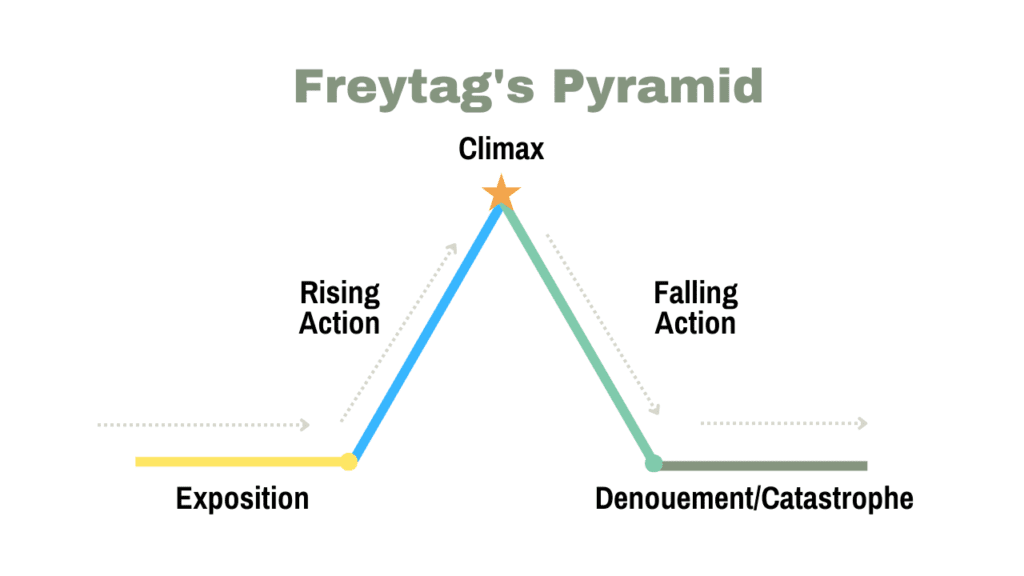
The shape of Freytag’s Pyramid is precisely what it sounds like. Exposition comes first, followed by rising action that builds to a peak, then a gradual transition into falling action and resolution.
Is It the Right Framework for Your Story?
For literary fiction and short pieces, where you’re working toward a single high point, this approach works nicely, especially if you enjoy precisely calibrated tempo. Since it is a simple arc from start to finish, it’s not the best option if your story has a lot of twists, subplots, or nonlinear events.
3. Story Spine / Pixar Formula
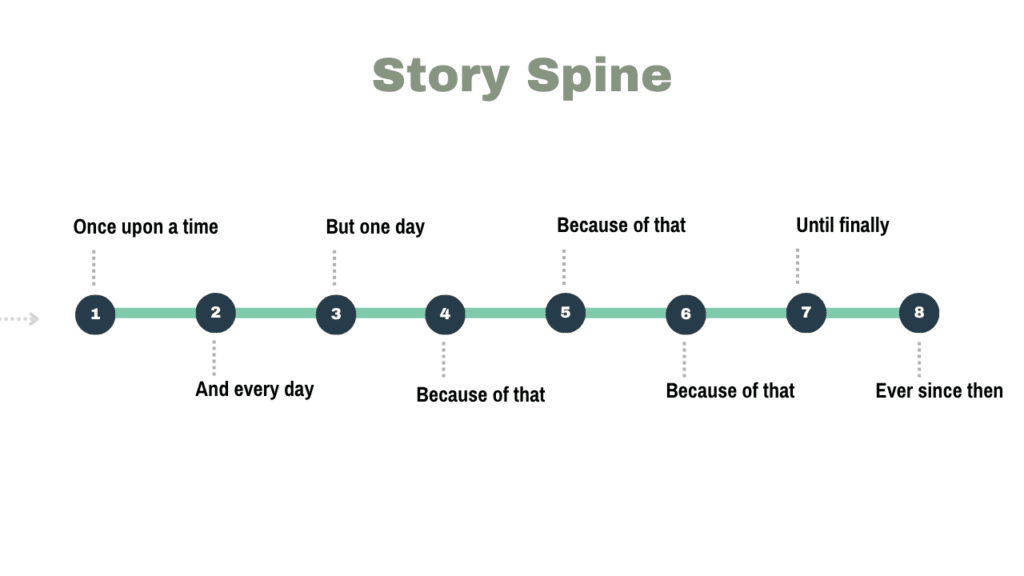
The Story Spine goes like this:
Once upon a time… Every day… Until one day… Because of that… Because of that… Because of that… Until finally… Ever since then…
At first glance, you might think this framework is only for a children’s story, but it’s not!
In our in-depth exploration of how the Story Spine works, we emphasized that it’s surprisingly adaptable. How come? Every action triggers the next event in the narrative, creating a natural momentum that mirrors how we experience events in real life.
Is It the Right Framework for Your Story?
It’s an excellent choice for authors who want to establish the story’s logic or who tend to “wander” in their storytelling. However, if you’re working on a more complex or multi-threaded story, you may find the Story Spine too basic.
4. The Three-Act Structure
This is the backbone of modern storytelling—used in novels, screenplays, plays, and everything in between.
As its name suggests, the story structure is divided into three acts:
- Act 1 introduces the world and characters.
- Act 2 raises the stakes and complicates things.
- Act 3 resolves it all.
Is It the Right Framework for Your Story?
It’s broad and flexible for just about any genre, which is precisely why so many writers use it. If you’re unsure where to start, this is a great first option.
The challenge? Act 2. Many writers end up with a sluggish middle. That’s because the structure leaves a lot of choices up to you—how the conflict unfolds, how many twists you introduce, how characters evolve. It’s a good skeleton, but you’ll need to flesh it out.
5. Save the Cat Beat

This structure is like the Three-Act Structure, but with extra key moments or ‘beats.’
There are 15 beats, such as the “dark night of the soul,” the “fun and games,” and the “theme stated,” working together to move your story forward.
Is It the Right Framework for Your Story?
It works well for all types of fiction genres, particularly those with a compelling plot. However, it may be too strict for you if you’re more of a character-focused storyteller or discovery writer.
6. Simon Sinek’s Golden Circle
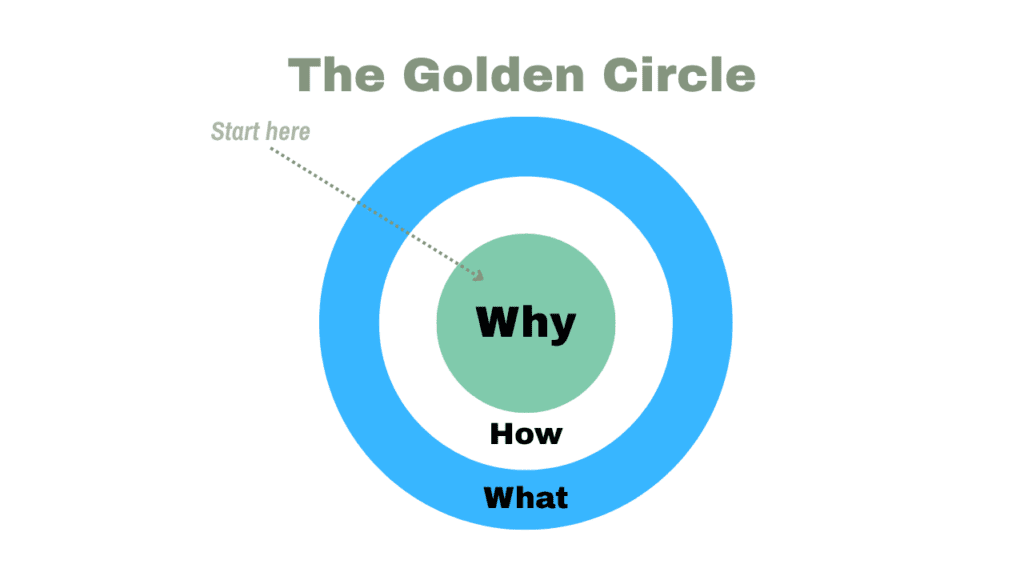
This one flips the usual structural approach on its head by focusing on the why rather than the what. And yes, that means you start with your story’s “why,” then build the “how,” and finish with the “what.”
Is It the Right Framework for Your Story?
Since it’s more philosophical than structural, it’s perfect for a character-driven story. Just don’t expect it to help with pacing or event sequencing. Remember, you need to view it as a foundation, not a timeline.
7. Fichtean Curve

This framework skips the slow build. Instead, you drop your character into a problem, then keep piling on more. There’s no lull, no downtime, just conflict, conflict, conflict until you hit the climax.
Is It the Right Framework for Your Story?
The Fichtean Curve framework is suitable for fast-paced genres, such as thrillers, mysteries, and action-heavy fantasy. That said, not every story can handle this pace. For instance, emotional beats and quiet moments may get lost if you’re not intentional about including them. And it takes discipline to keep the stakes rising without repeating yourself.
It works best when you plan your escalation carefully and treat each scene as if it matters more than the last.
8. Seven-Point Story Structure

This one’s all about precision. You start with the ending and work backward. The seven points include your hook, first plot point, mid-point, second plot twist, and resolution.
Is It the Right Framework for Your Story?
If your story includes major reveals or reversals, this framework is right for you. Not only does it give you control over pacing and payoff, but you will also know precisely when to raise the stakes and when to pull the trigger on a big reveal. The tradeoff? An outline is necessary before you begin writing.
Deciding Which Framework Is Best for You
Need a little help deciding which of these eight frameworks is the perfect fit for your story idea? Enter this AI prompt in ChatGPT (or any other AI tool):
I want to write a story about [insert your story idea. Be as detailed as possible]. I'm having trouble deciding which framework is most suitable. As my editor, please give me the pros and cons of each framework below:

The Hero's Journey
Save the Cat Beat
The Three-Act Structure
Simon Sinek's Golden Circle
Seven-Point Story Structure
Story Spine / Pixar Formula
Freytag's Pyramid
Finding the One That Works for You
Every writer has their own unique perspective, and every story has its own specific needs. There’s no “better” framework; they’re just different ways of seeing things.
So, feel free to mix, match, or tweak these frameworks until they work for you. The best framework is the one that makes you (and your audience) enjoy the ride from the first page to the end.