
So, you have an idea for your first novel, but how do you actually write one? Do you build the conversations first, start with the characters, or just see where the story takes you as you write? Well, the truth is, there’s no one-size-fits-all method – but taking things step by step can make the process a whole lot less intimidating, especially if you are just starting out.
Here’s how you can start writing a book in seven simple and manageable steps:
Step 1: Pick a Genre
If you are an avid reader, you are aware that every book genre has its own unique elements, styles, and storytelling conventions. For instance, romance novels often center around character chemistry, while fantasy builds entire worlds from imagination.
So, choosing your genre early helps you set expectations—of course, not only for yourself, but also for your readers. Here is a closer look at some of the most popular book genres.
Something to keep in mind: Genres can overlap (i.e., romance novel set in a fantasy world). What’s important is that you pick one that feels closest to your story.
Fantasy
In fantasy, you’ll often find magical worlds, mythical creatures, and cultures that feel real—even though they exist only in the imagination.
To craft a compelling story, intentionally incorporate these elements into your plot.
Fantasy book examples:
- The Wheel of Time by James Oliver Rigney
- Narnia by C. S. Lewis
Romance
Whether it’s a lighthearted rom-com, a slow-burning love story, or a steamy romance, strong chemistry and emotional growth are what keep readers hooked in romance novels.
Romance book examples:
- It Ends With Us by Colleen Hoover
- The Hating Game by Sally Thorne
Thriller
Thrillers use tension and urgency to keep readers on the edge of their seats. They often center on a protagonist who must either stop or survive the threat. Of course, the plot is fast-paced, and unexpected twists are core elements of a thriller.
Thriller book examples:
- Gone Girl by Gillian Flynn
- The Silent Patient by Alex Michaelides
Mystery
Unlike thrillers, mysteries focus less on danger and more on deduction, logic, and revealing clues one by one. The suspense here builds from the satisfaction of discovery and the “aha!” moment when everything clicks into place.
Mystery book examples:
- The Murder of Roger Ackroyd by Agatha Christie
- The Girl with the Dragon Tattoo by Stieg Larsson
Horror
Horror stories thrive on eerie settings, psychological tension, and the feeling that something sinister is lurking just out of sight. What makes a good horror story? It disturbs, haunts, and lingers in the reader’s mind long after the story ends.
Horror book examples:
- The Shining by Stephen King
- Bird Box by Josh Malerman
Dystopian
Dystopian fiction explores fractured societies marked by fear, oppression, and, of course, control. These stories often feature rigid class systems (like The Hunger Games series), constant surveillance and the loss of individuality (as seen in the Uglies series), and totalitarian power (as depicted in The Handmaid’s Tale).
Dystopian book examples:
- 1984 by George Orwell
- The Handmaid’s Tale by Margaret Atwood
Step 2: Nail Down What You Really Want to Write About
Now that you have a genre, the next step is to nail down what you really want to write about. In other words, what idea, theme, or question do you want to explore? Here are two simple ways to uncover or refine your book topic:
- ABC method: A simple way to generate ideas from A to Z that helps you spot patterns and expand on topics.
- Writing prompt generators: These tools can ideate fresh angles, plot twists, or character features that add new directions to your story.
Tip: Regardless of the book idea brainstorming method you choose, be mindful of storytelling clichés. Remember, familiar tropes can only work if you add your own twist or provide a fresh perspective.
Step 3: Choose a Storytelling Structure
Genre? Check!
Book plot? Check!
The next step is deciding how to tell your story. This means choosing a storytelling structure that shapes how your plot unfolds. Let’s take a closer look at some popular frameworks:
The Three-Act Structure
With a three-act structure, your story has a beginning, middle, and end.
- In Act One, you introduce the main protagonist, the world they live in, and the conflict that disrupts their life.
- By Act Two, the stakes are higher thanks to the escalating challenges and obstacles that test your character’s beliefs and limits.
- Lastly, Act Three consists of the climax and the resolution, which brings everything together and shows how the journey has changed the protagonist.
The Hero’s Journey

The Hero’s Journey follows a protagonist who departs from their routine, finds difficulties, gains knowledge from mentors, and eventually returns as a new person. This structure works well for fantasy, adventure, or any narrative that focuses on personal development.
The Save the Cat Beat Sheet

Initially designed for screenwriting, the Save the Cat Beat Sheet structure helps you outline your story in 15 clear “beats” or moments. By doing so, your pacing feels natural and your emotional payoffs feel satisfying. Some of its best-known beats include the Catalyst, the Midpoint, and the Dark Night of the Soul.
The Story Spine
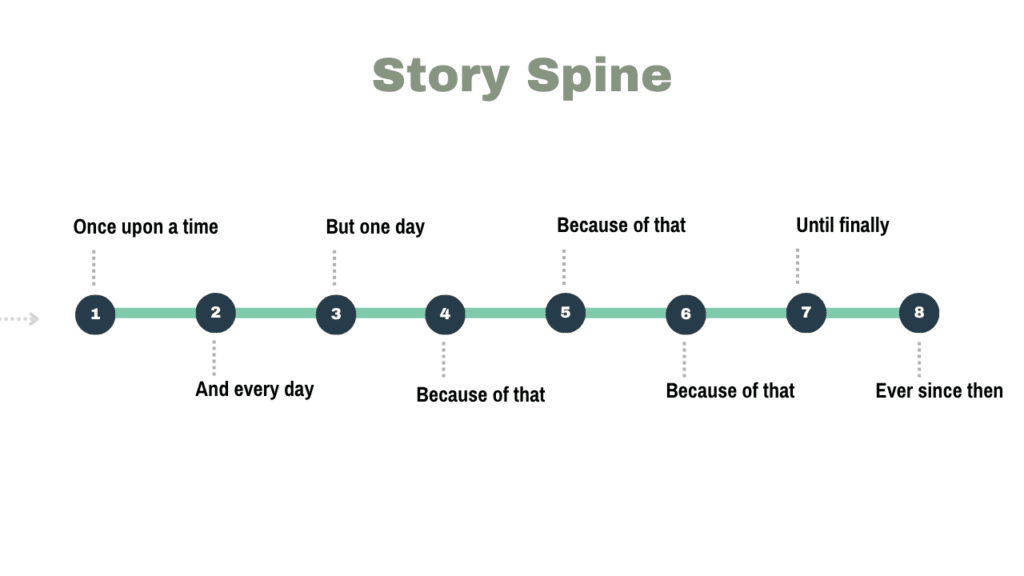
The Story Spine provides a clear formula for mapping cause and effect in a story. It uses prompts like “Once upon a time…” and “Until finally…” to trace out your narrative progression. It’s excellent for both beginners and experienced writers who want a story that flows naturally while leaving room for creativity.
The Chosen One Archetype
If your protagonist is destined for greatness, the Chosen One structure might be the right fit for your story. However, it’s also one of the most overused frameworks in fiction. To make it stand out, focus on transforming this archetype from cliché to catalyst.
Tip: You don’t have to stick to just one model. Many writers combine structures; for example, using the emotional beats of Save the Cat within a Hero’s Journey arc.
Can’t decide which framework is best for your story? Enter this prompt to ChatGPT:
I am writing a [insert genre] book about [insert plot]. Help me decide which storytelling framework is best suited for my novel idea.

- Save the Cat Beat Sheet
- Three Act Structure
- The Chosen One
- Hero's Journey
- The Story Spine
Step 4: Outline Your Novel
Now it’s time to turn your idea into a working book outline.
- Break down the structure into scenes: This means breaking down your chosen story framework into individual scenes. Remember that each scene should have a clear purpose.
- Build your story’s main plot: Map out the central conflict and ensure that it connects to your protagonist’s goals.
- Create a powerful character arc: Outline how your protagonist changes from start to finish.
- Summarize your chapters: Write a few bullet points or a short paragraph for each chapter. By doing so, you have a clear sense of pacing and progression.
- Refine your outline: Review your outline and adjust it as needed – i.e., weak transitions and unnecessary scenes.
Tip: A strong outline will keep your creativity focused and your writing on track. But an outline is flexible—you can always adjust it as your story evolves.
Step 5: Write the Opening Sentence
Your first line sets the tone for everything that follows. There are many creative techniques to begin your story. You can open with:
- An unexpected action
- A vivid sensory image
- A sneak into your main character’s thought process or living conditions
- Tension that hints at your inciting incident
- Setting the mood through rhythm and word choice.
Here’s a prompt to help you brainstorm for the opening sentence:
I am writing a [insert genre] book about [insert context of your story, including key elements like the protagonist, setting, theme, and plot].

I want you to brainstorm the opening sentence. Consider the following:

- An unexpected opening
- Sensory image of the setting
- Short but emotionally charged opening
- Letting my main character speak
- Setting the mood
- Establish tension
- Frame story
- Hint at the inciting incident
Step 6: Write the First Draft
You now have everything that you need to start writing! Remember, your first draft doesn’t need to be perfect. What matters most is getting the story out of your head onto the page, then continuing to write until your story is complete. Here are some tips to help you stay on track.
Set a Realistic Writing Schedule
Whether it’s 500 words a day or a few hours each weekend, always choose a writing routine that fits your schedule. Treat your sessions like appointments you can’t miss. And yes, that means showing up even when you don’t feel inspired.
Create a Focused Writing Space Without Distractions
Your writing space should help you concentrate. Pick a quiet spot, clear away clutter, and add small cues (such as setting background music, adjusting the lighting, or even using a specific scent) that signal to your brain it’s time to write.
Of course, keep distractions, especially your phone, out of reach or use focus apps to stay in the zone.
Track Your Progress
Seeing your word count grow builds momentum and a sense of accomplishment. Try using a spreadsheet, writing app, or even a notebook to track your sessions and progress. Don’t forget to celebrate small wins!
Step 7: Edit Your Manuscript
Got your manuscript? Great! Editing is where you turn your rough draft into a ready-to-publish book – even successful authors edit! Before tinkering with grammar or word choice, start with the big-picture elements first: structure, plot holes, character development, and pacing.
Tip: Don’t skip outside feedback: beta readers, critique partners, and professional editors can help you spot things you might miss.
Below are a few short, practical steps and tools you can use during the editing process.
- Fix Big-Picture Issues: Check your plot, character arcs, and pacing. If a phrase, idea, or word feels awkward, consider rewriting it or removing it before polishing any additional details.
- Edit Scene by Scene: Each scene should advance the story, reveal characters, or build tension. If not, take them out.
- Polish the Style: Tighten sentences, trim adverbs, fix typos, and make dialogue sound truly natural.
- Get Feedback: Ask beta readers or a professional editor for honest input. You can also use ChatGPT editing prompts to help with structure or dialogue.
- Write Draft Two: Double-check and combine all your notes to rewrite with clarity and confidence.
Tip: Editing can take multiple rounds of revisions.
Start Writing a Book Now
And there you have it! You’re ready to start writing your book. Remember, there’s no single “right” way to do it—but taking it one step at a time makes the process far less daunting.